



Flexible Packaging: Future proofing FMCG with Thermal Transfer Overprinting (TTO)
Why flexible packaging is the format of choice for the FMCG industry
Innovation in the fast-moving consumer goods (FMCG) sector, including packaging formats such as flexible films, plastic bottles and cartons has accelerated significantly in recent years. Mintel's Global New Products Database (GNPD) now tracks more than 45,000 consumer packaged goods launches every month . Much of this innovation has been focused on pack design. It includes the adoption of flexible packaging formats, recyclable mono-material structures, refill formats, and connected packaging solutions to meet evolving consumer, regulatory, and sustainability requirements.
Meanwhile, as manufacturers seek to reduce costs and meet more demanding sustainability targets, flexible packaging is expected to remain the preferred format for many FMCG applications. In fact, the market is forecast to grow at a compound annual growth rate (CAGR) of between 5% and 6% over the coming decade. Lighter substrates, faster production lines and the ability to print 2D codes to meet regulatory standards and facilitate brands’ marketing initiatives add to the challenge. It means that coding and marking technologies must be capable of producing consistently high-quality, durable and traceable codes without compromising efficiency.
In a highly competitive market, flexible packaging has now established itself as the format of choice for FMCG brands throughout food, beverage, personal care, and household sectors. Industry forecasts estimate the global flexible film market will approach US$80 billion by 2029. This growth is underpinned by flexible packaging’s lightweight properties and its ability to deliver superior product protection, lower costs, and operational efficiency in a single solution. It is supported by the effectiveness of Thermal Transfer Overprinting (TTO) technology, widely regarded as preferred solution for printing on flexible packaging, producing high-quality codes to meet changing market demands. It also reflects the sustained investment in packaging formats that reduce material use, improve logistical efficiency and offer greater consumer convenience.
Production is faster, smarter and more connected
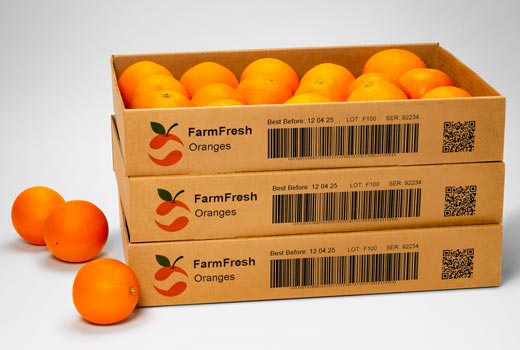
The majority of FMCG packaging lines are now expected to handle shorter production runs, more frequent product changeovers and a greater number of SKUs while maximizing Overall Equipment Effectiveness (OEE). In addition, manufacturers need to print more complex and variable information, from traceability data to 2D codes and GS1 Digital Link codes, on all types of flexible packaging including secondary packaging. These codes must remain durable and machine readable at high line speeds.
Coding has therefore evolved to become a critical manufacturing process that supports regulatory compliance, product authentication, consumer transparency and end-to-end supply chain visibility.
Why TTO is the preferred coding technology
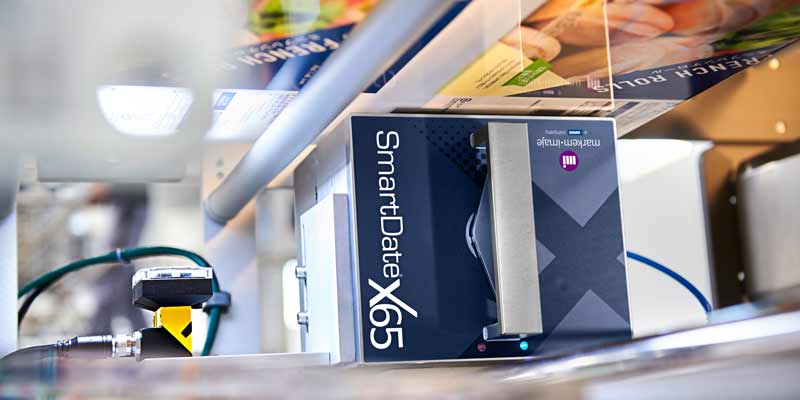
Unlike other coding methods, TTO technology was developed specifically for printing onto flexible packaging films running on horizontal and vertical form-fill-seal equipment and it is therefore uniquely suited to today's high-speed FMCG production environments.
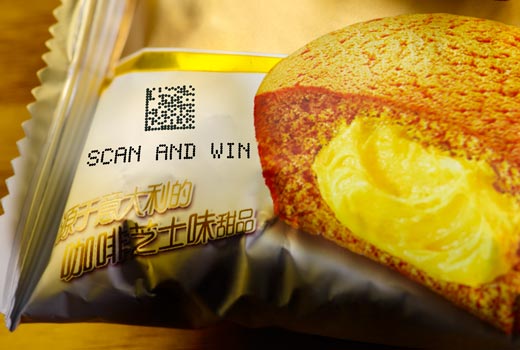
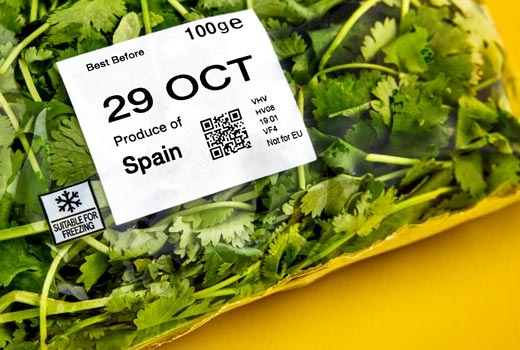
The printhead transfers ink directly from a ribbon onto the packaging film delivering exceptionally sharp, high resolution and durable print with excellent resistance to smudging and abrasion. For increasingly automated supply chains this high print quality is critical. It ensures text, barcodes, GS1 Digital Link symbols and other machine-readable codes can be scanned reliably, maximising uptime. As Digital Product Passports (DPP) and connected packaging become more widely adopted, the print quality that TTO solutions provide will only become more important.
As mono-material films and other lightweight flexible packaging structures are adopted more widely, a key requirement for coding solutions is the ability to perform consistently across a greater range of substrates. Modern TTO ribbons have evolved alongside the development of these substrates, delivering excellent adhesion and durability on a wide range of flexible packaging films without the challenges linked to solvent emissions that are associated with some alternative coding technologies. some alternative coding technologies.
Lower Total Cost of Ownership (TCO)
Although coding solutions are often compared on equipment purchase price alone, long-term operating costs tell a different story. Accurate coding reduces costly product recalls and the risk of fines, and reliable print quality reduces waste. At the same time, digital message management minimizes operator errors and predictable ribbon consumption simplifies consumable management.
Combined with high equipment availability and low maintenance requirements, for most manufacturers, TTO solutions can offer lower TCO than alternative coding technologies.
A sustainable future for flexible packaging
Today, consumers expect packaging to be easy to use and recycle. Meanwhile, brands and retailers require packaging formats that maximize shelf utilisation, aid differentiation and reduce logistics costs. Manufacturers are faced with meeting these requirements while driving improvements in operational efficiency, reducing material consumption and lowering their environmental impact.
The evolution of flexible packaging has helped to address all these factors. It has also led to fundamental changes in the way FMCG products are designed, manufactured, transported and consumed.
The versatility of flexible packaging is one of its greatest strengths. And as brands diversify across their product range leading to shorter production runs, this versatility is increasingly valuable. The same substrate can be adapted across multiple pack sizes, product formats and applications, helping manufacturers to simplify packaging inventories and respond quickly to changing demands.
Flexible packaging is already widely used across food packaging applications including confectionery, bakery, dairy, frozen, fresh produce and ready meals. It is also playing an increasingly significant role in the beverage packaging sector, supporting growing demand for pouches, concentrates and bag-in-box systems. Personal care and household brands are also increasingly reliant on pouches and sachets for products such as shampoos and detergents.
Notably, flexible packaging now plays an important role in many secondary packaging applications, including shrink films, multipacks and transport packaging, helping to improve handling efficiency and reduce material consumption as well as transportation costs throughout the value chain.
Convenience and circularity drive continued innovation
Today’s consumers expect brands to offer convenience without compromising sustainability. It is a significant challenge, but flexible packaging offers many features that enable both to be delivered effectively. Resealable zippers, easy-open tear notches, single-portion formats and stand-up pouches all improve convenience at the same time as reducing waste. Other unique features such as transparent product windows give consumers greater confidence, allowing them to see the product before purchase, strengthening shelf appeal and brand trust.
Packaging design is now also key to driving improvements in environmental performance. Reducing the weight of pack formats is not sufficient in isolation – packaging design must support the principles of a circular economy.
Innovation is therefore increasingly focused on recyclable mono-material structures manufactured entirely from polyethylene (PE) or polypropylene (PP). These simplify the recycling process compared to multi-material laminates, many of which are not recycled at scale. Manufacturers are also investing significantly in bio-based polymers and compostable films produced from renewable feedstocks such as cellulose and starch for suitable applications.
These convenience-led innovations underpinned by design for recycling principles, have helped flexible packaging to evolve far beyond its core purpose. It is now integral to the overall consumer experience and is enabling the value chain to make a positive contribution to a more circular economy.
Manufactured from polymers such as polyethylene (PE), polypropylene (PP) and polyethylene terephthalate (PET), alongside multi-layer laminates, flexible packaging films are commonly used across both primary and secondary packaging. Combining effective barrier protection which reduces waste, with premium shelf appeal, the format is lightweight and adaptable, making it suitable for a variety of market segments. Compared to some rigid formats, flexible packaging also uses less material, reducing weight and transportation costs as well as associated CO2 emissions. In addition, flexible packaging formats which are easy to open and reseal meet the growing demand for convenience. It makes flexible packaging an attractive proposition for brands and retailers, as well as consumers. And this combination of performance, cost efficiency and sustainability is set to drive continuing global market growth.
Future proofing flexible packaging production lines
Flexible packaging is set to play a central role in FMCG manufacturing, helping to address many of the challenges the industry faces including product protection, waste reduction, logistical efficiency, convenience and circularity. As traceability requirements, DPPs and 2D coding capabilities become more important, TTO solutions remain uniquely positioned to meet the challenges ahead.
Combining exceptional print quality, reliability, and the versatility to meet rapidly changing market demands, TTO technology will remain the preferred solution for flexible packaging, helping the FMCG industry to future proof packaging operations for a more circular economy.
Ends.
Frequently Asked Questions (FAQ)
Why is flexible packaging the preferred choice for modern FMCG products?
Flexible packaging has become the preferred solution for FMCG manufacturers because it combines product protection, lightweight construction, operational efficiency and sustainability. It uses less raw material than many rigid alternatives, lowers transportation costs and provides excellent barrier protection that extends product shelf life. Flexible packaging also offers the versatility to package a wide variety of products and supports a range of features such as resealable closures, easy-open designs and refill formats which offer consumers greater convenience.
How is coding and variable information printed on flexible packaging?
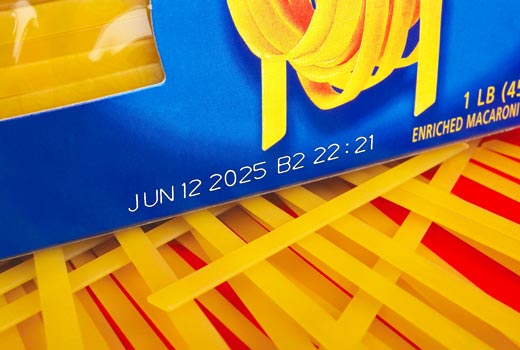
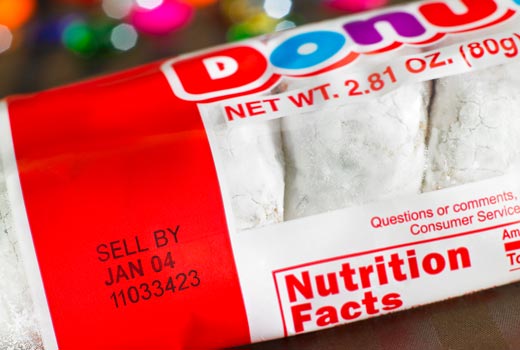
Variable information such as batch numbers, expiry dates, barcodes, QR codes and GS1 Digital Link symbols is typically applied during the packaging process using specialist coding and marking equipment. For flexible packaging applications, Thermal Transfer Overprinting (TTO) is widely recognised as the preferred technology because it was specifically designed for printing onto flexible films used on horizontal and vertical form-fill-seal packaging lines. TTO produces high-resolution, durable codes with excellent contrast and allows manufacturers to update variable information digitally without interrupting production.
Why is high-quality food packaging printing so important?
Food packaging printing plays a critical role in food safety, regulatory compliance and product traceability. Accurate coding enables manufacturers and retailers to identify products throughout the supply chain, support stock rotation, facilitate targeted product recalls and comply with food labelling regulations. Today’s food packaging also includes 2D codes and GS1 Digital Link technology, providing consumers with access to provenance, allergen, recycling and product information. High-quality coding ensures these codes remain legible and scannable throughout the product lifecycle, reducing waste, minimising avoidable costs and protecting brand reputation.